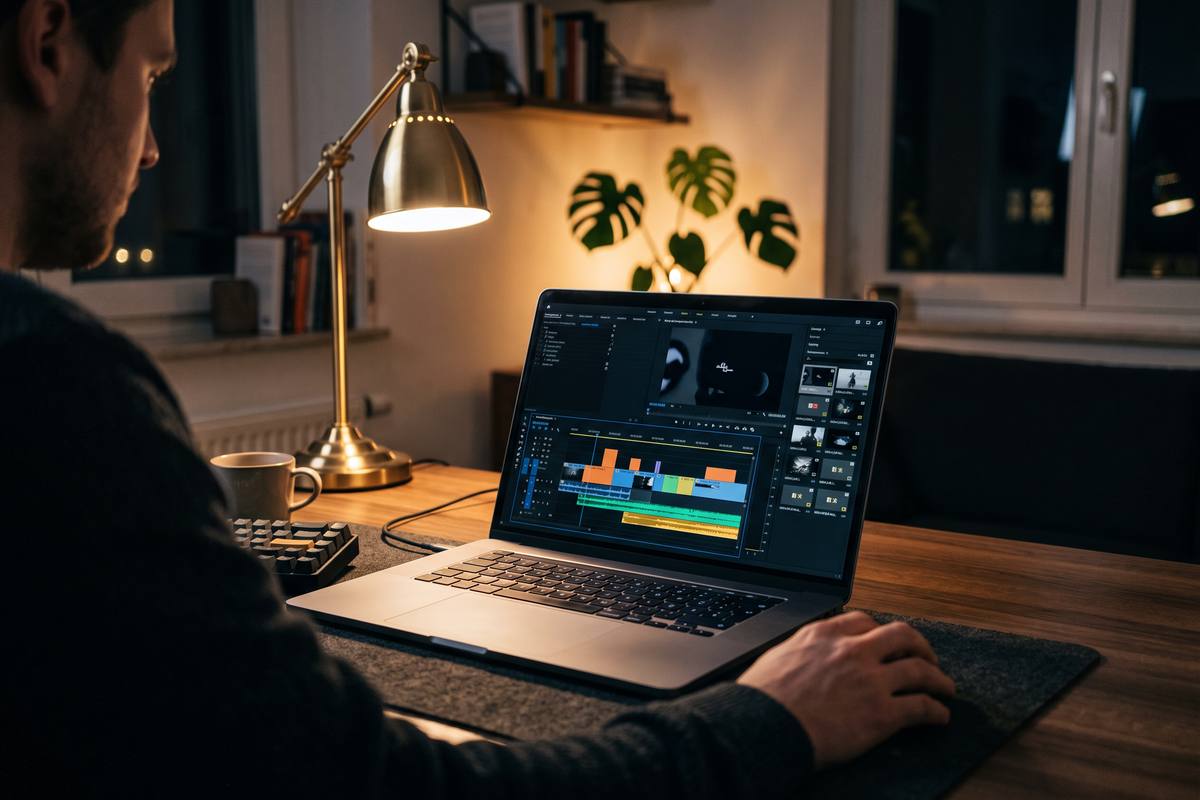
Shot planning
How to Build a Shot List for a 30-Second Video
The six columns, the numbering habit and the four-to-six beats that give a short video a structure the edit can follow.
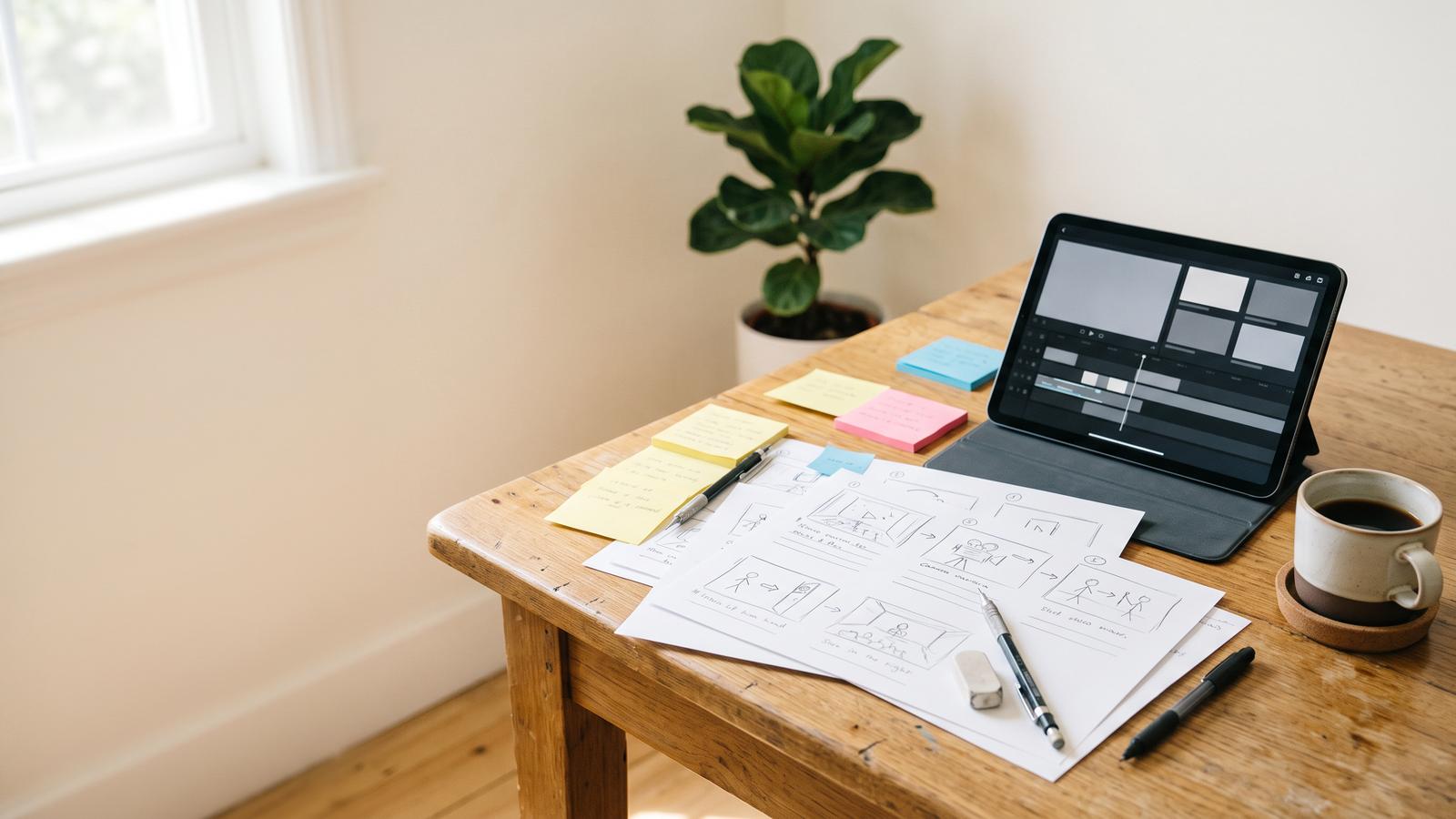
Storyboards, shot lists and schedules
A short planning session turns a vague idea into a numbered list of shots you can actually film. These guides show the documents we use on client work, from a one-page shot list to a full shooting-day schedule.
Why plan
Planning is not paperwork. It is the difference between arriving with an idea and arriving with a list of shots that fit the story, the light and the time you actually have.
Most creators lose their best footage in the edit, not on set. They film plenty, but the takes do not connect: no establishing frame, no clean detail shot, no reaction to cut to. A shot list written in advance solves that by forcing you to decide, on paper, what the sequence needs.
The three documents below cover the full process. Start with the shot list, add a storyboard only when the visual idea is complicated, and finish with a schedule so the day does not depend on luck or on your phone holding battery in an unplanned location.
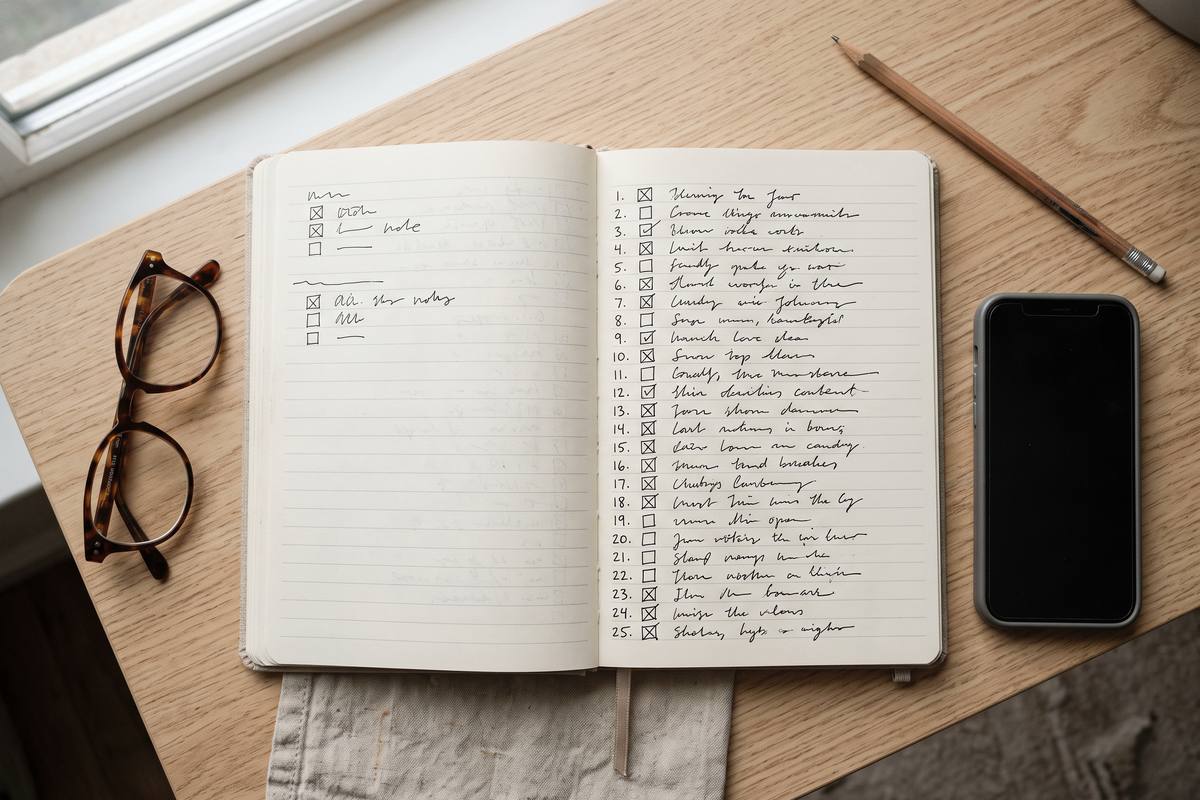
We plan every client shoot around a numbered shot list and a written fallback for each scene. On the day, that means fewer decisions under pressure and more time for the shots that matter.
The method
Before any shot is imagined, write what the viewer should understand by the end. One sentence, no adjectives. Every decision in the next three steps has to serve that sentence.
A thirty-second video usually holds four to six beats: an opening hook, a setup, a demonstration, a payoff and a closing action. Each beat becomes a group of shots in the list.
Column headings, in this order: number, beat, shot, framing, movement, notes. Write the shots you need, then write one backup shot for each scene you cannot repeat.
Order the shot list by location and light, not by script order. Group everything that shares a setup, and place any shot that depends on natural light early.
Shot lists
A usable shot list is short enough to hold while filming and specific enough to remove decisions. Six columns are enough: shot number, which beat it serves, what the shot shows, how the frame is built, whether the camera moves, and any note about props, dialogue or the light.
The discipline that makes it work is numbering. Numbers let you discuss the edit while you are still shooting: you can see immediately that beat three has only one angle, or that you have six wide shots and nothing to cut them against.
Before the shoot
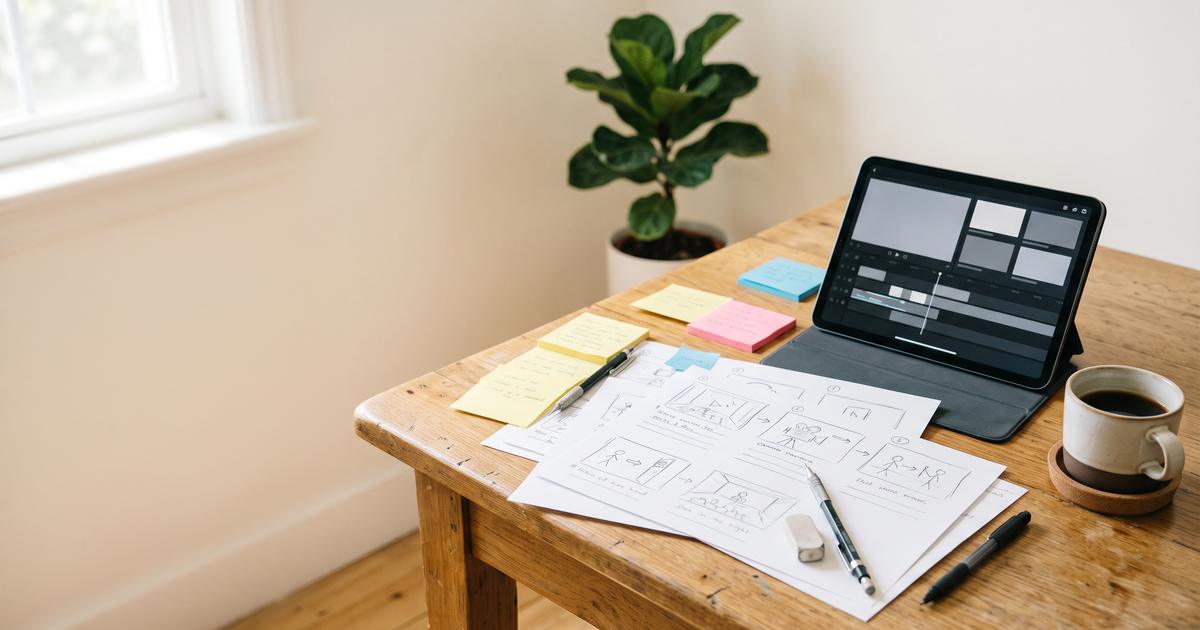
Run down this list the day before filming. It takes ten minutes and it prevents the most common editing dead ends.
Planning questions
Between twenty and forty minutes for the first version: ten minutes for the promise and beats, fifteen for the shot list, five for the schedule. Planning gets faster with repetition because the beats stop being a question.
No. Storyboards earn their time when the sequence depends on movement, effects or a specific visual idea. For talking clips and simple product shots a shot list plus reference stills is usually enough.
A clean plate is the same framing filmed without the subject or with hands out of the way. Editors use it to place captions and graphics without covering the subject, and to cover cuts in a sequence.
Group everything that needs natural light into the first block of the day and film the flexible shots afterwards. Always plan an interior fallback for any exterior scene you cannot reshoot.
The plan is the same, but the practical notes differ. Phones heat up and need shorter takes, so plan more, shorter shots; larger cameras need more setup time, so plan fewer, longer sequences.
Guides
Three documents, three guides. Read them in order and you have a complete method for planning short-form video.
Shot planning
The six columns, the numbering habit and the four-to-six beats that give a short video a structure the edit can follow.
Storyboarding
Rough rectangles are enough. Draw the frame, the movement and the cut, and stop before the drawing becomes a project of its own.

Production planning
Build the day around light, group setups, and decide in advance what gets cut when time runs short.
Feedback
If you have built a list and it is not surviving contact with the shoot, write to us. We read every plan that gets sent in and explain what we would change.